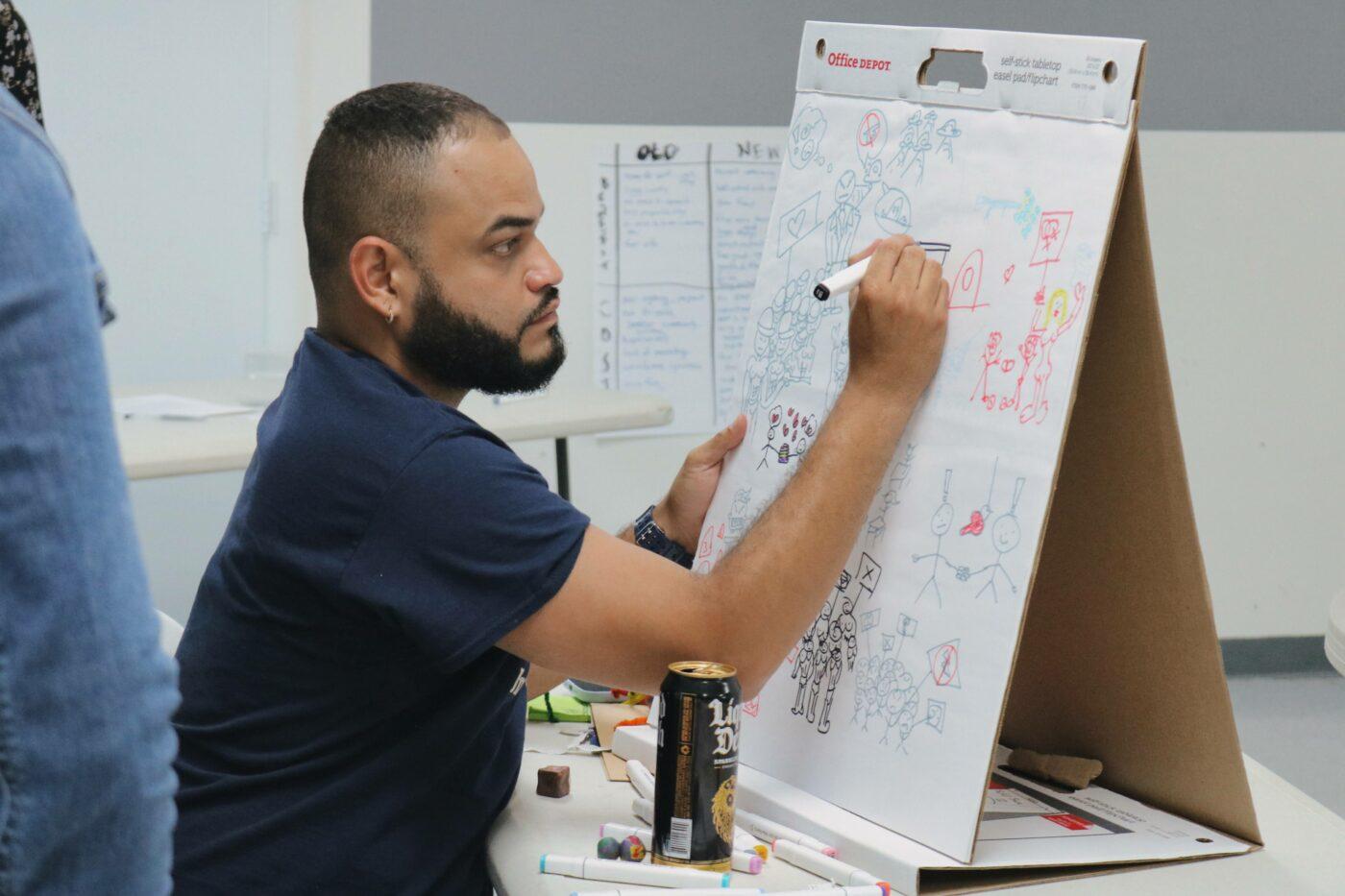


The Center provided SWEAT with the tools to bridge theory and practice, enhancing both their internal team and broader movements by making their activism more strategic, effective, and creatively impactful.
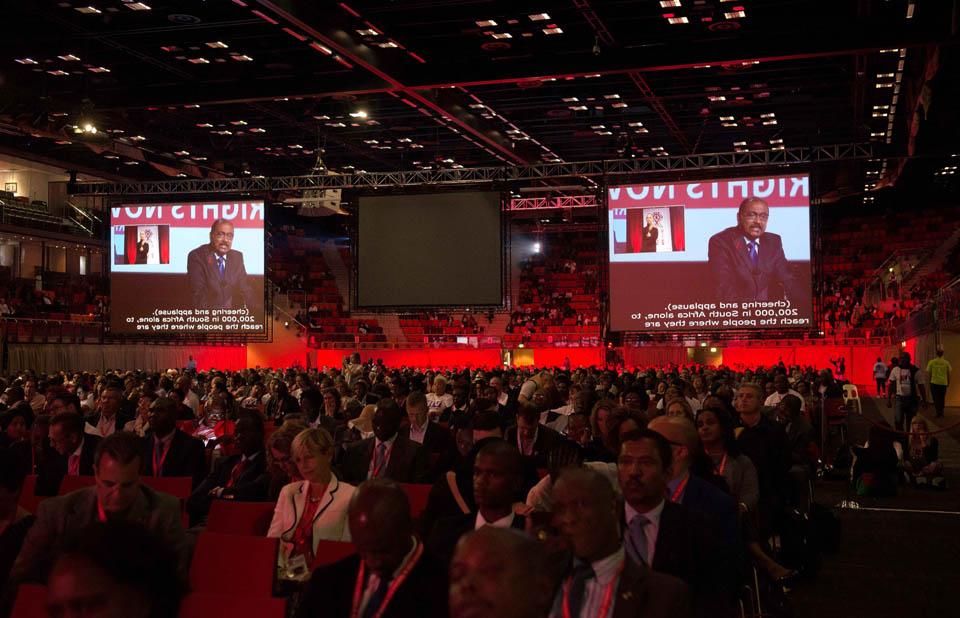
In 2016, the Center partnered with the Sex Workers Education and Advocacy Task Force (SWEAT) at the AIDS Conference in South Africa, aiming to spotlight sex workers’ rights, a topic often stigmatized and ignored. Through this partnership, SWEAT developed a “count-up clock” that tracked how long speakers avoided the term “sex work.” When the term was finally mentioned for the first time, the person holding the clock (and a red umbrella) celebrated, triggering a 30-second cheer. This creative action encouraged other speakers to mention sex work, shifting the narrative and drawing significant media attention to the issue.
SWEAT’s creative activism, supported by the Center, also included the impactful “Desk of Disappointment,” where a skeleton sat at a government desk. The action pressured the government to release a long-delayed report on sex worker legislation. According to Ishtar Lakhani, SWEAT’s Advocacy Manager, “The 2016 AIDS Conference was pivotal. Other organizations saw the impact of the Center’s work and realized we weren’t just ‘crazy weirdos’—our creative methods were effective.”
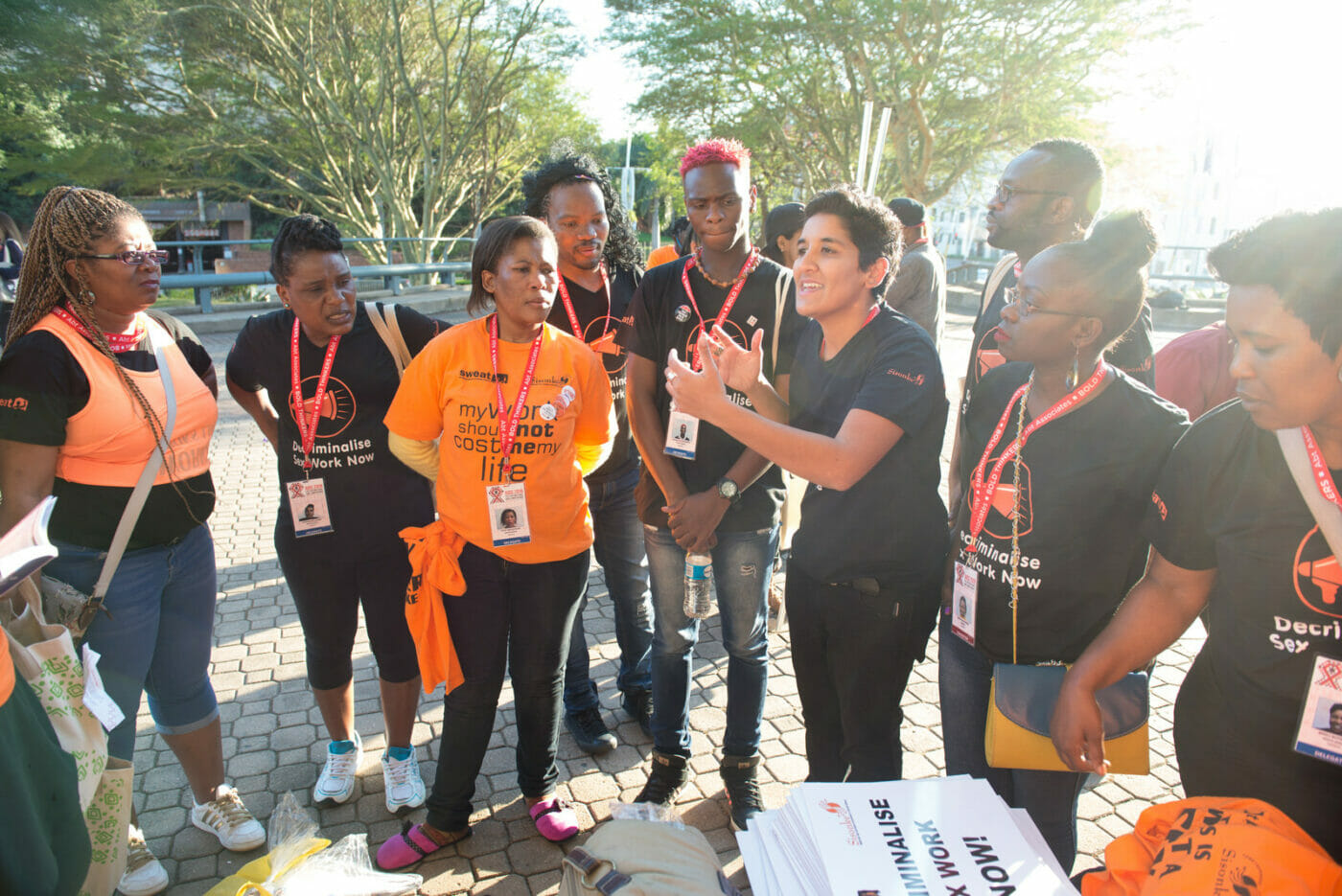
“The Center’s training was eye-opening because it provided the language and theory behind what we were already instinctively doing. It wasn’t just creativity for creativity’s sake; it was about making our activism more effective.”
— Ishtar Lakhani, Sex and Gender Activist, South Africa

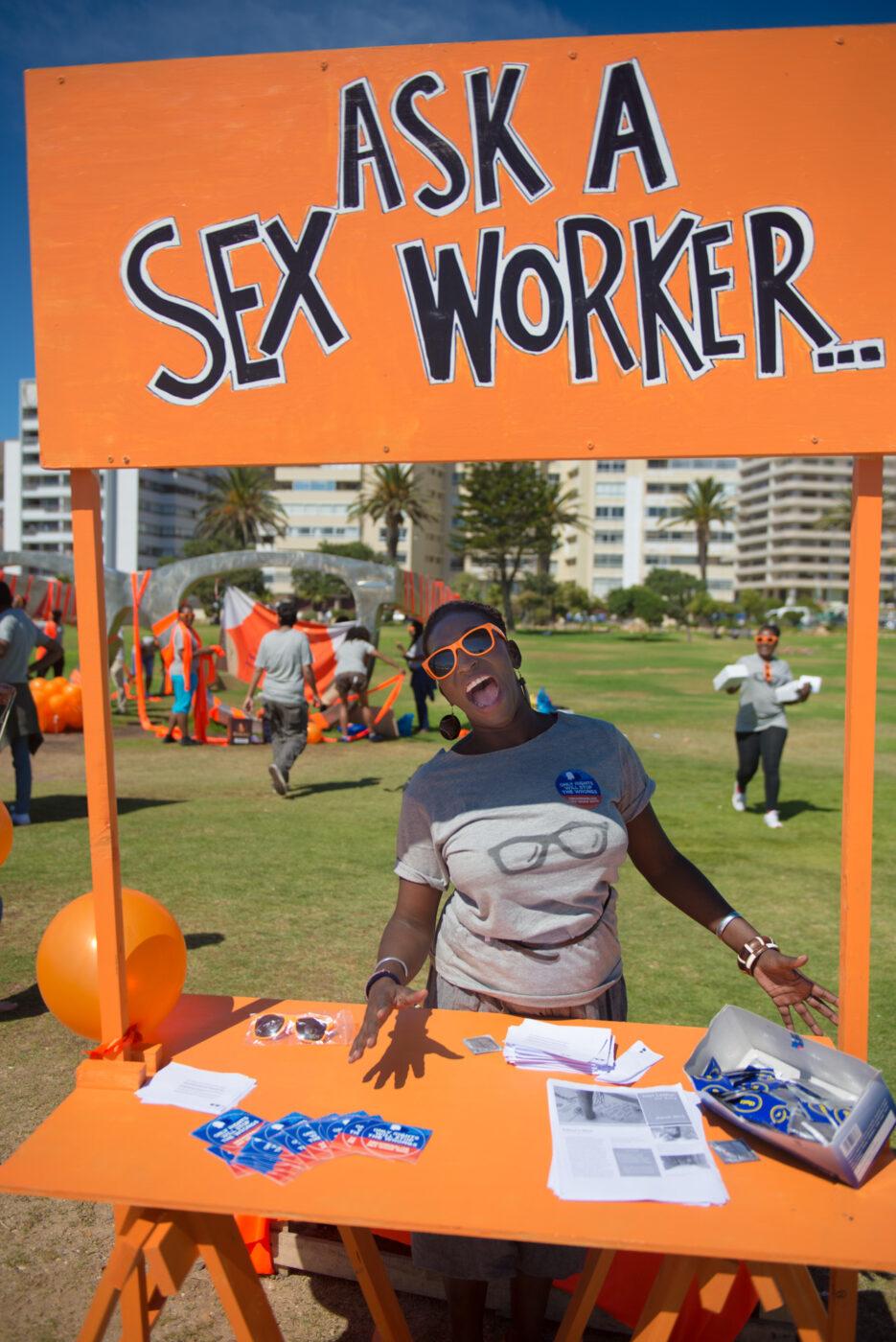
Another notable campaign was the mock “Sex Worker for President” during the South African elections, which surprisingly received widespread support and led to political parties including sex worker rights in their platforms.
According to Ishtar, “The Center for Artistic Activism gave us the tools to connect theory with practice, and it wasn’t just about creativity for creativity’s sake—it made our activism more effective.”
The partnership with The Center not only strengthened SWEAT’s internal team but also inspired broader movements, setting a new standard for creative activism. The Center’s influence continues in how SWEAT and other organizations approach advocacy, demonstrating the lasting impact of innovative, creative strategies.
You are reading a portion of our 15 Years of Impact report.

Learn more about the impact report and our nine global case studies. Here’s an example:
-

Impact Study Methodology
Our methodology combined quantitative and qualitative research to assess the Center for Artistic Activism’s impact. It included data collection from workshops, surveys, interviews, and evaluations. Responses were analyzed for recurring themes, which were grouped into eight categories, revealing how C4AA’s training influences strategy, creativity, community engagement, and advocacy outcomes worldwide.