

Higher education produces informed citizenry prepared to navigate the world through the many challenges we all will face ahead. The effective and considered use of creativity and civic action are key parts of that education.
Yet, too often barriers exist between studying theory and the actual practice of implementing change. This can result in student action that is ill-considered and thus ineffective, which breeds student despair and cynicism. What’s worse is recent efforts to suppress the voices of young people – and their instructors – are chilling civic participation. This makes it harder than ever to guide and support students hoping to bring about positive change within the multiple crises we face.
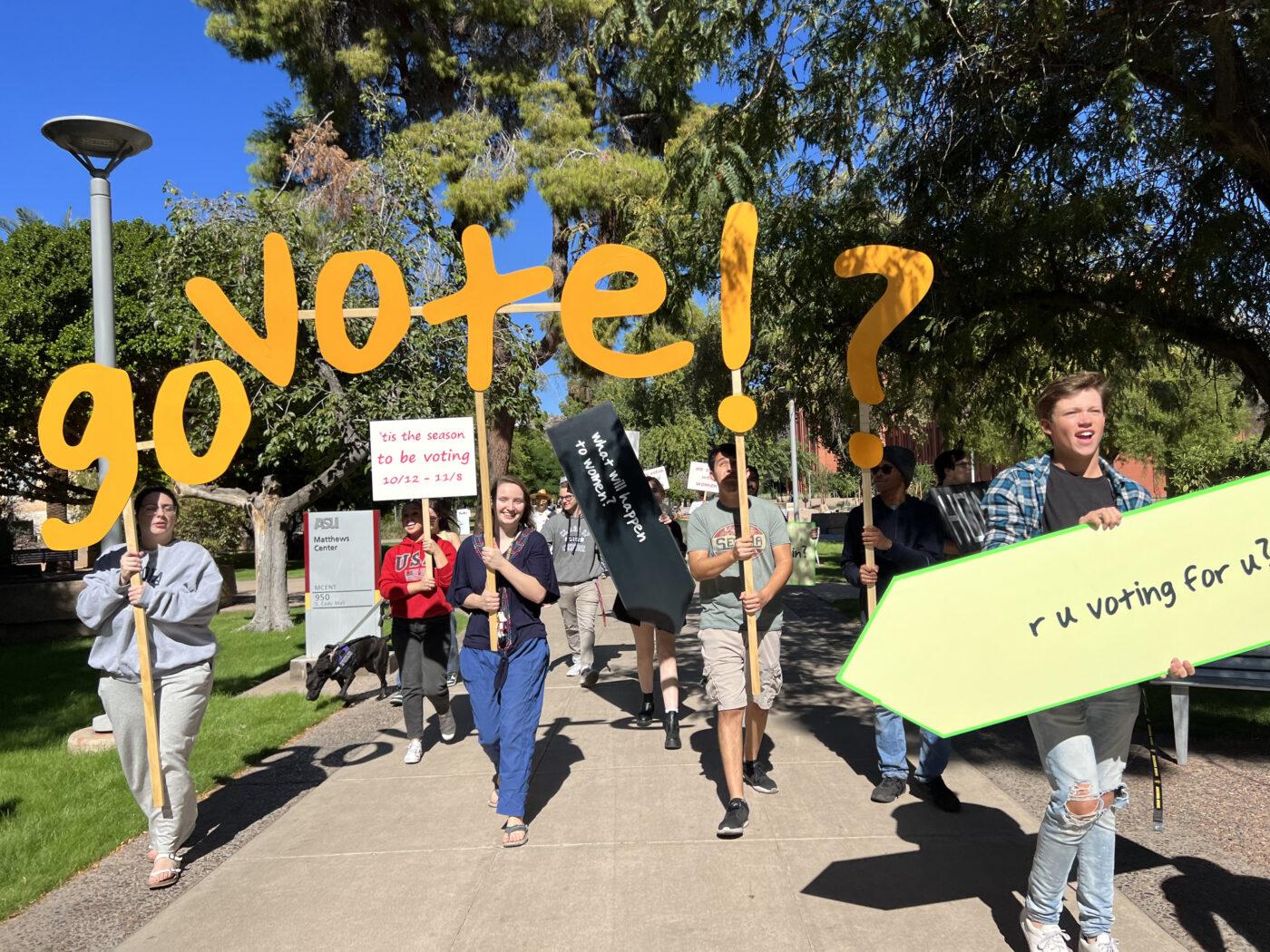
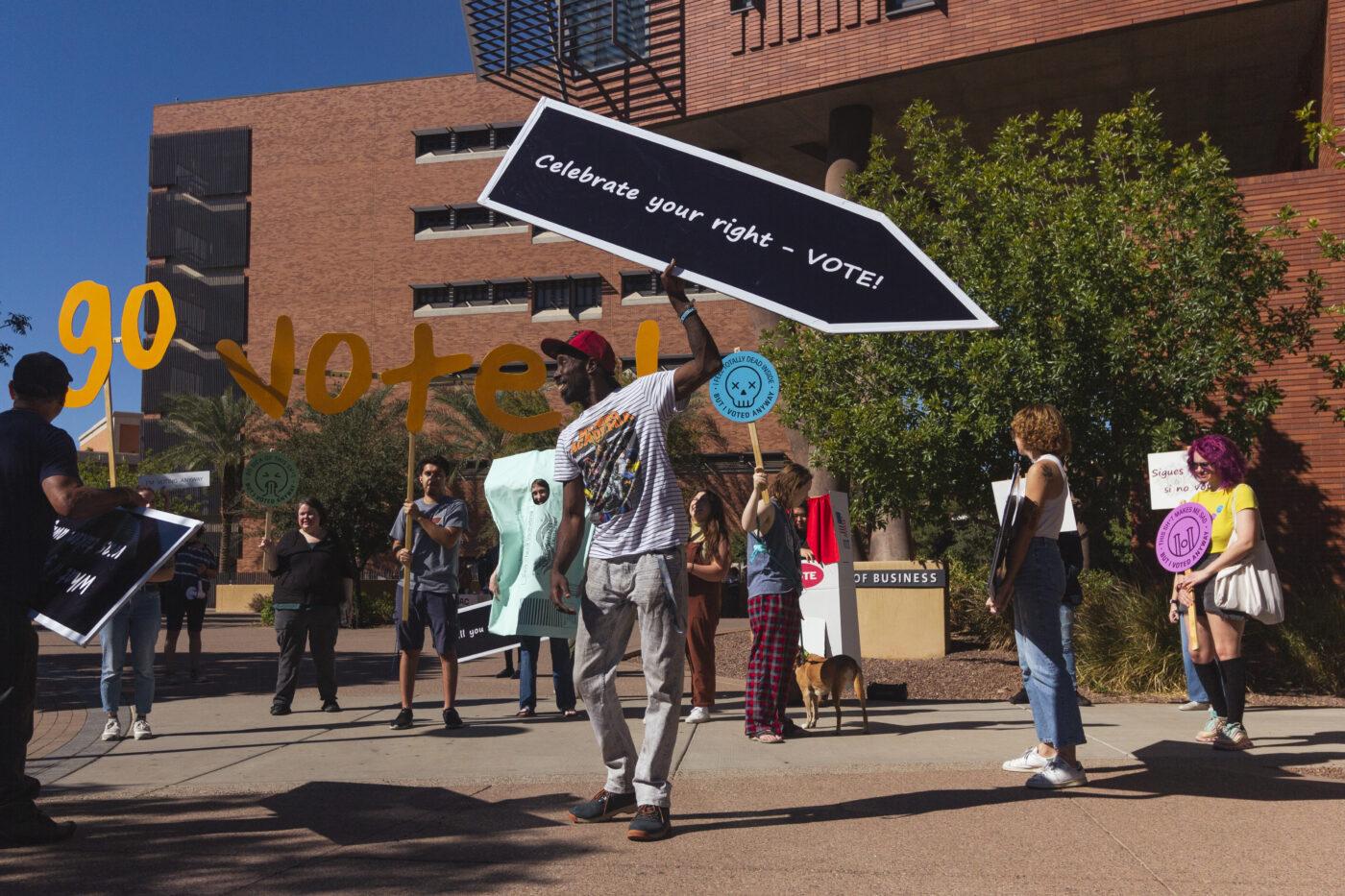
Students from Arizona State University mobilize their community to vote

I learned so much this semester. I was really unprepared for the level of both apathy and feelings of helplessness in the students as we began. They presented what I thought was a real challenge. But using the resources and the toolkit that the Center for Artistic Activism has provided really started to shift and transform the way that we went about this.
–Susan L Smith
Unstoppable Voters Faculty Fellow
Associate Research Professor of Art and Graduate Coordinator of the Intermedia Programs, University of Maine
It’s time for a new era of creative civic engagement in higher education. We need a way to animate critical ideas that moves through barriers to civic action. A way that results in activities that engage rather than alienate. A way that aligns with the mission of higher education, and serves the needs of diverse communities within and without the institutions themselves.
We know just what that looks like
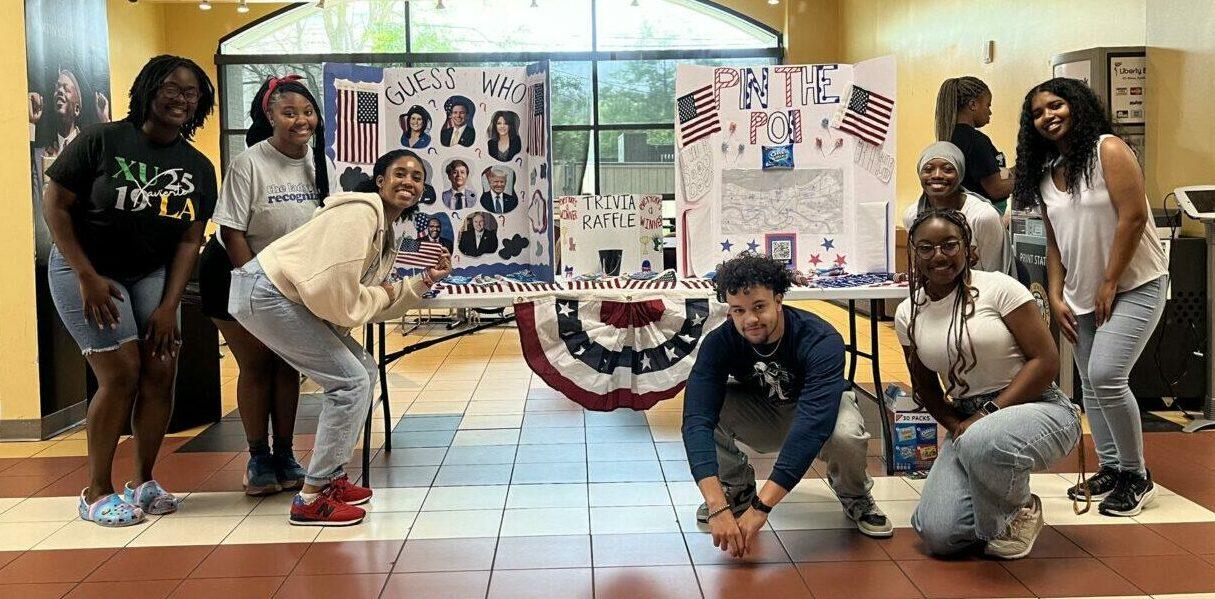
“The Political Party” at Xavier University
Creative activism methodologies in higher education brings innovative, unique, and proactive ideas to college and university campuses. These methods encourage students to investigate and reflect on contemporary issues, then share their concerns using innovative ways that are more likely to be heard.
Interested in integrating artistic activism into higher education?
How the Center for Artistic Activism helps
At the Center for Artistic Activism, we know the terrain of higher education. Our co-founders are both college professors, and we’ve been working with higher education institutions for decades.
The Center for Artistic Activism has served higher education in many different capacities, including:
- Faculty Fellowships: C4AA provides fellowships to faculty, who get access to curriculum and mentoring. Fellows learn and share creative activism teaching strategies with peers in other disciplines;
- Artistic Activism Courses: C4AA teaches classes, gives lectures and leads workshops on artistic activism at dozens of campuses around the world;
- Partnering with organizations that promote campus advocacy: C4AA serves on the Steering Committee for Campus Vote Project. We are also part of the Students Learn Students Vote Coalition;
- Activating Students in Global Campaigns: C4AA led Free the Vaccine with Universities Allied for Essential Medicines. It was a vaccine equity campaign that mobilized students at dozens of universities around the world; and
- Artistic Activism Curriculum: C4AA shares our library of creative civic engagement lessons with faculty to embed in their coursework.
Case studies
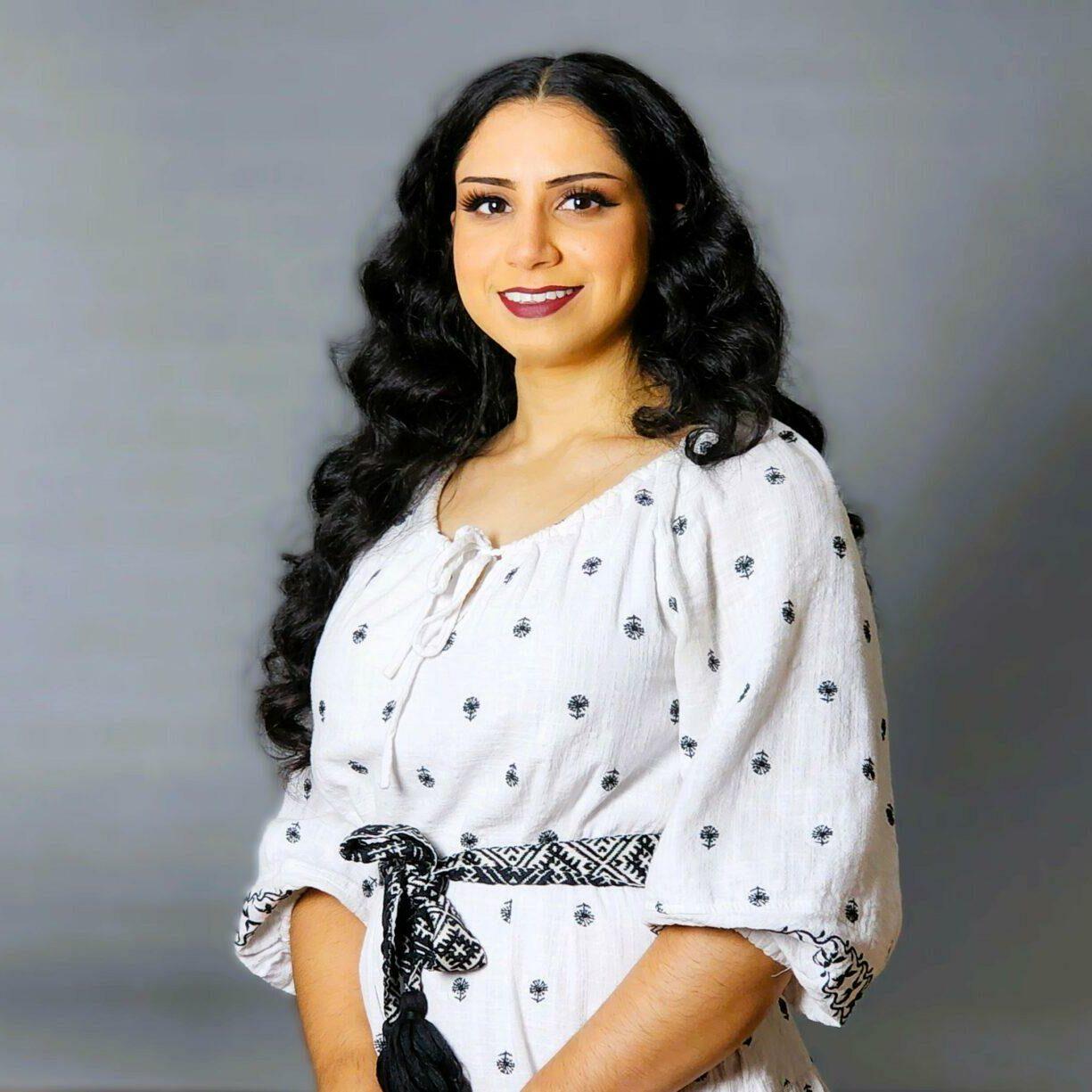
Daniella Mascarenhas has brought artistic activism curriculum into her political science classroom and to out-of-classroom events. This has led to registering students to vote and educating about civics through games and events.

D.T. Burns has infused theater courses at with dynamic lessons on artistic activism and civic engagement. In their playwriting and performance courses, students create multimedia performances that lead to voter registration.
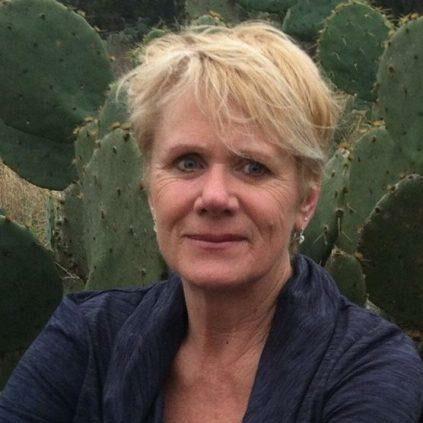
Susan Smith has used C4AA curriculum and materials to redesign her art and intermedia classes. This has led to projects that create material improvements in the community, including community print-making, a dialogue cafe, and a voter registration center.
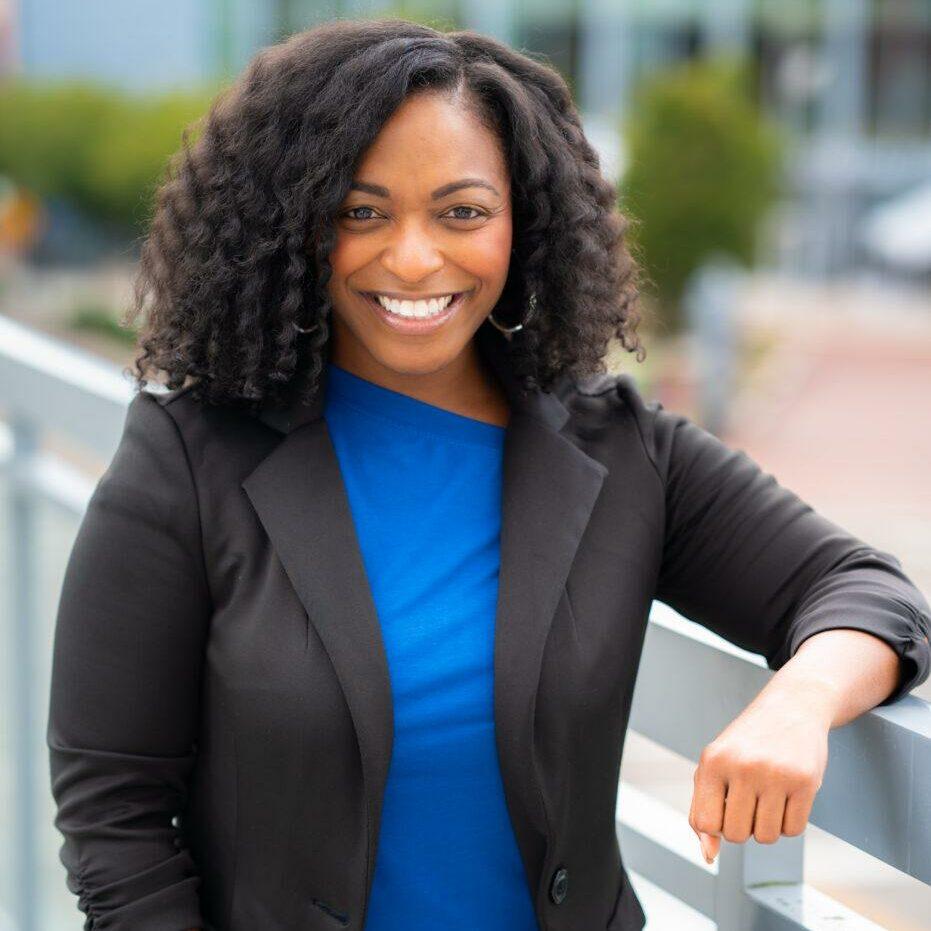
Brittney S. Harris and her students of theatre performance and community engagement have created Amplify the Poll! which included a workshop for the public on civic engagement and the power of choice.

Margit Berman has integrated artistic activism into her clinical psychology courses, applying best practices to advocacy, particularly on psychologists’ student loan debt and other student-relevant issues.

Kristin Hughes has dedicated semester-long design classes to forging connections with community organizations focused on student voting and civic engagement.



How do artistic activism resources help faculty?
At the Center for Artistic Activism, we provide faculty with curriculum, resources and materials to integrate into classrooms. Our Faculty Fellowships also help faculty learn from our C4AA experts on how to teach artistic activism – lessons we’ve learned from over 15 years teaching this material around the world. The Fellowship also provides a network of other faculty in diverse disciplines.
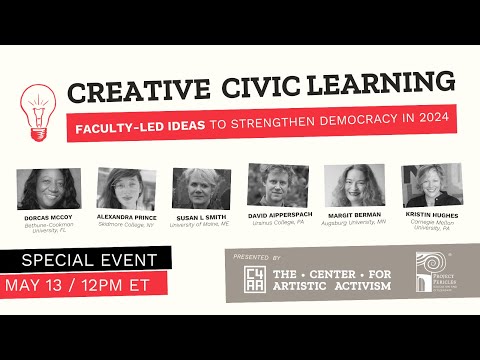
“This opportunity has been so important… The resources you all provide and the interaction with other faculty have been supportive at a time when I know this could not be more necessary.”
– Susan L Smith
“The [Center for Artistic Activism] curriculum resonated with students. It created an uptick in discussion around politics and activism in the classroom, as well as inspiring a number of projects that directly and indirectly incorporate the lessons learned.”
– D.T. Burns
“I was really struck by how hungry our students are for creativity. And for the kind of engagement of spirit that happens when you incorporate creativity into advocacy work and addressing problems at a systemic level.”
– Margit Berman
Want to work with us?
If you’re involved in higher education and want to bring creative activism to your work, get in touch.