

Assessing the Impact of Artistic Activism – Report

After nearly a decade of interviews with artistic activism practitioners and over a year of reviewing academic literature and professional reports, the C4AA Æfficacy Project Research Team has released a substantial report: Assessing the Impact of Artistic Activism. Read and download the full report or a concise 4-page summary. Assessing the Impact of Artistic Activism …

Webinar #18: How Do We Know If It Works? Part 1

This is one of our most popular webinars. We’re sorry if you missed it happening live, but you can check out the video, which is 97.587% as great. Sign up for future webinars to get in on the live action. In this webinar, Steve and Steve talked with the fantastic scholar/activist Jan Cohen-Cruz and A …

What Would Jesus Do? (as a Creative Activist)

By C4AA Co-Founder Stephen Duncombe My proselytizing here is of a political rather than religious nature. It isn’t the divine figure of Christ I am interested in but the purely historical Jesus, a radical Mediterranean Jewish peasant building a revolutionary movement two millennia ago. Jesus of Nazareth was an activist, and, judging by the two-thousand …

Familiar vs. Novel – Everything is a Remix

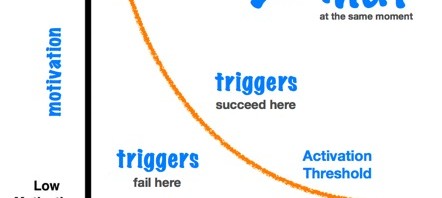
First, if you’ve never seen Everything is a Remix, go watch it now. It’s a great primer on creativity, originality, and copyright. Recently Kirby Ferguson posted a new installment about the new Star Wars movie, The Force Awakens. https://vimeo.com/167069783 Towards the end he makes a point about a sweet spot existing between the familiar and …

How do you measure the impact of socially engaged art? 

In our new Æfficacy project we’ve been working with our colleague George Perlov, thanks to funding from The Open Society Foundations and The Compton Foundation to begin to answer that question. As a first step, we’re conducting a literature review on the topic and George will be spotlighting a few of the interesting things we’ve found so far. Today …

And what do I do now? Using Data Visualization for Social Change

Last week, the C4AA’s Steve Lambert attended the Responsible Data Forum on Data Visualization. In this article, Lambert discusses how data visualizations for social change can leverage emotion to achieve objectives. Those who visualize data can be reluctant to sully themselves in the messy world of emotions and empathy. If your goal is social change …

The future and why we are terrible at predicting it « You Are Not So Smart

I am listening to the You Are Not So Smart Podcast and reminded of how often Stephen Duncombe and I encounter these faulty visions of the future. Thing like “We’ll never be able to do _______.” or “That’s just not going to happen.” come up in our workshops. It is because we all have such …

In Kansas, Climate Skeptics Embrace Green Energy – NYTimes.com

Attempts by the Obama administration to regulate greenhouse gases are highly unpopular here because of opposition to large-scale government intervention. Some are skeptical that humans might fundamentally alter a world that was created by God. If the heartland is to seriously reduce its dependence on coal and oil, Ms. Jackson and others decided, the issues …

Charting Creativity: Neurologically

Charting Creativity: Signposts of a Hazy Territory NY Times, Patricia Cohen, May 7, 2010 Grab a timer and set it for one minute. Now list as many creative uses for a brick as you can imagine. Go. The question is part of a classic test for creativity, a quality that scientists are trying for the …

Art Power

Boris Guys, Art Power (MIT Press: 2008) “Art becomes politically effective only when it is made outside the art market — in the context of direct political propaganda.” “Of course, one can easily argue that such propaganda art is simply political design- and image-making….They are making advertisements for a certain ideological goal — and they …

Politics of Surrealism

Some interesting tidbits from The Politics of Surrealism by Helena Lewis (NY: Paragon House, 1988) ” tried to link together two revolutions: that of the mind, by liberating the unconscious, and the social and economic revolution of the masses. The Surrealists always maintained that one of the most important ways to undermine capitalism is to …

Art and Revolution – The MIT Press

As hopeful as it is incisive, Art and Revolution encourages a new generation of artists and thinkers to refuse to participate in the tired prescriptions of marketplace and authority and instead create radical new methods of engagement. Raunig develops an indispensable, contemporary conception of political change—a conception that transcends the outmoded formulations of insurrection and …

Is "professionalization" in art equal to success?

I caught a link on We Make Money Not Art to this Artworld Salon article that contemplated the criticism of an increasingly professionalized art world. The article questions, “What’s wrong with professionalization?” after citing examples of back-handed comments towards the MFA and PhD in the arts. The questions it raises are: does “professionalization” make artists …

Power needs culture

from Terry Eagleton’s new book: Reason, Faith and Revolution (Yale: 2009) p. 150 “Culture is what beds power down, interweaving it with our lived experience and thus tightening its grip upon us. An authority which fails to do this will loom up as too abstract and aloof, and thus fail to secure its citizens’ unqualified …

"Entertainment- Education and Social Change"

“Entertainment- Education and Social Change” M.J. Papa, et al, Journal of Communication, 50, 2000, pp. 31-55 This seems to be the ur article for most recent research in this field. Again, what’s useful here is that these folks are taking efficacy seriously, relating it to culture, and are looking for demonstrable effects. entertainment-education

The Efficacy of Soap Operas

“Increase in Calls to the CDC National STD and AIDS Hotline Following AIDS-Related Episodes in a Soap Opera” by May. G. Kennedy, Ann O’Leary, Vicki Beck, Katrina Pollard, and Penny Simpson An article tracking material audience response to the inclusion of AIDS related themes in a soap opera. Now if art ever had a national …

On The Media: The Science of Media Relations

Being a brilliant scientist doesn’t always translate into being a good talking head on television or even a good source for a science reporter. So the Aldo Leopold Leadership Program at Stanford University was created to give scientists a better understanding of how to deal with the media. Program director Pam Matson explains what goes …