


What this technology looks like when it’s built by creative people who are actually in the fight.
1. DebunkBot
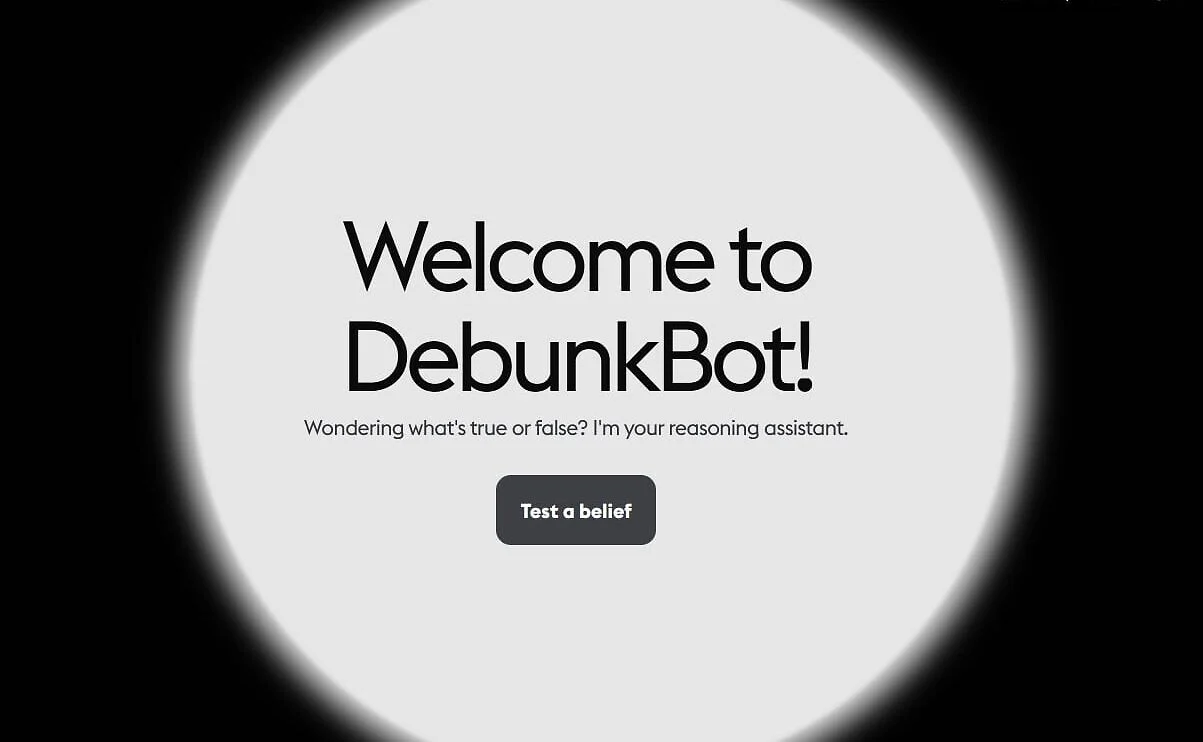
One great example is Debunkbot, an AI tool that has the conversation you’ve been dreading with your uncle at Thanksgiving. The one about whatever conspiracy theory he’s onto now and all the details, unhinged arguments, gish-galloping – all wrapped up in a slightly antisemitic subtext . But Debunkbot knows all the things, can engage in every claim, stays polite and considerate, and never loses patience. In a published MIT study, just three back-and-forth exchanges with the AI produced a 20% average reduction in the strength of people’s conspiracy beliefs – and the effect held for at least two months.
Feel free to pause here and forward this link to your uncle now: https://debunkbot.com
2. The Patients Union & Daisychain
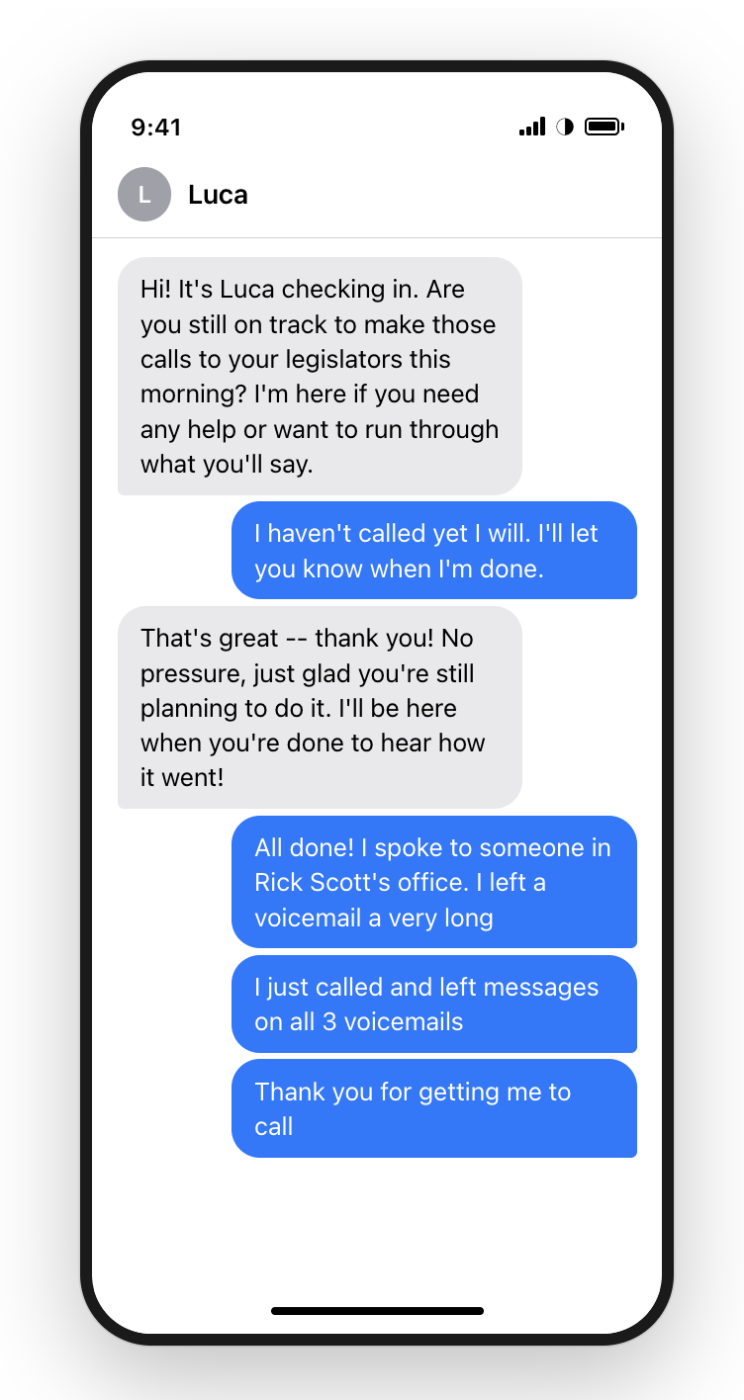
Our new partners at The Patients Union solved a typical problem with a creative solution. The challenge was bringing in new audiences and engaging them immediately – when they’ve just joined and are motivated. So they ran an experiment. Using an AI-powered text tool called “Luca,” they reached low- and middle-income people in red states the moment they signed up — when motivation is highest — and had hundreds of back-and-forth conversations simultaneously. People understood that Luca was an AI bot, but they didn’t mind. 57% committed to calling their legislators. 59% shared deeply personal stories. The experiment workid.
That’s artistic activism: creative problem-solving, a willingness to test something new, and results that prove it is effective.
3. Better Providers: Change Agent AI & Thaura
Change Agent was built because organizers at leading civil rights organizations got tired of the cycle – Big Tech promises the world, then jacks up prices once you depend on them, then exploits your data and you, while reneging on their climate commitments. (Classic!) So they built their own: a platform that runs on private infrastructure that “never touches Big Tech servers,” tuned specifically for advocacy and organizing. Their users include SEIU and a dozen other movement organizations. On the environmental question specifically, they note that 250 of their users consume roughly the energy of a single refrigerator – helpful info when you’re weighing tradeoffs.
Thaura has a different origin. They tell their story this way: Two Syrian brothers built careers in Germany’s tech industry, then grew increasingly uncomfortable with the work as they watched the genocide in Palestine unfold. When Syria’s dictatorship finally fell, they quit their jobs and asked: what can we actually do with our skills? They went looking for an ethical alternative to ChatGPT accessible to non-technical users — and when they couldn’t find one, they built it. They ended up connecting with Tech for Palestine, an incubator for tech startups oriented toward a free Palestine, and found their community there. Their full story is here.
4. Syrian Archive
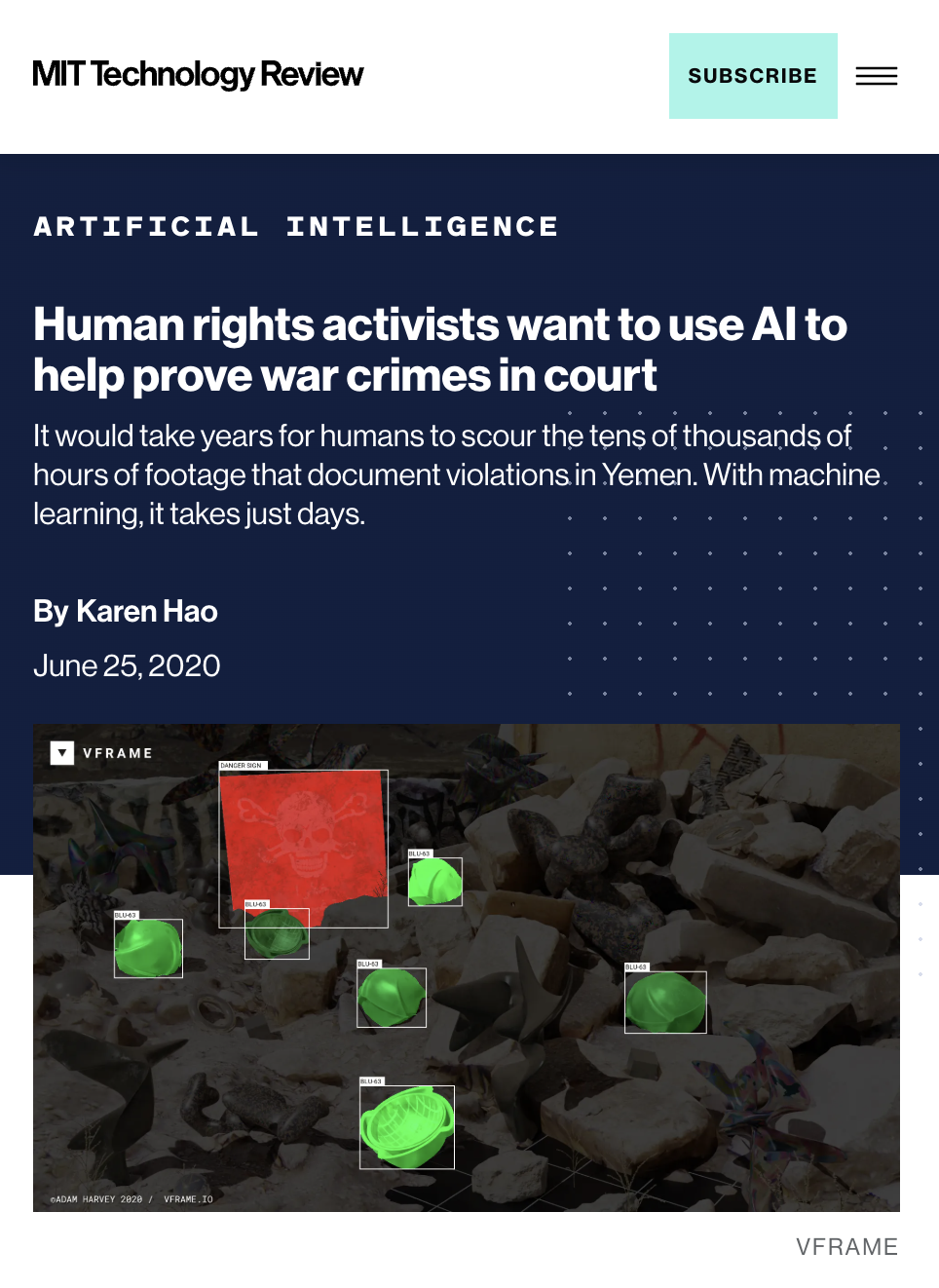
Syrian Archive is a Syrian led effort that collects war footage from Syria before it can be removed (by machines) on social media platforms. They then use a machine learning tool called VFRAME to identify evidence of illegal weapons (like cluster bombs) in the video files. They are finding war crime evidence in an enormous archive of found footage, all without requiring humans to watch traumatizing war footage hour after hour.
5. Fair Count & the Center for Artistic Activism
Fair Count had a theory: an AI-generated gospel song and video, played in church, would get more people to commit to vote than a standard educational video. Using AI video tools meant they could rapidly produce five distinct content styles (educational, sermon, comedy, interactive, and gospel) at a fraction of the cost and time of traditional video production, making the whole experiment feasible in the first place. Each style led to the same digital “commit to vote” card. The gospel song was right at home. The comedy segment wasn’t – a humor break during a service felt out of place. And the interactive video asked people to pull out their phones mid-worship, which didn’t land either. Without the ability to actually test all five, that internal decision is made based on hunches instead of real data.
Learn about how to run tests like these and find what works with our free Field Tests Guide.

5. Jake McGaffen (aka Packard Jennings)
Genre music follows a formula, and country music’s formula is well known; twangy guitars and lyrics about simple country life, drinking, pickup trucks… you get the idea. Packard Jennings went deep with AI powered music generating software to piece together a modern country anthem, then posted it on all the streaming platforms. Search “Jake McGaffen Cowboy not a Nazi” and you’ll hear a very catchy song about country life, drinking, pickup trucks, and loving the USA. Then the bridge slams Putin and Kim Jong Un, before the sing-a-long chorus of “I’m a Cowboy not a Nazi/It’s a simple thing.” In the next verse he declares his love for hunting and guns, before knocking the Klan and the Proud Boys… you get the idea.
I challenge you to listen to the whole thing and not sing it to yourself for the rest of the day. Listen on Spotify, YouTube, Apple Music


These case studies are not all perfect solutions. However, they do show that the field isn’t monolithic. Values-aligned alternatives are being built by people with real stakes in getting it right.